Wētā
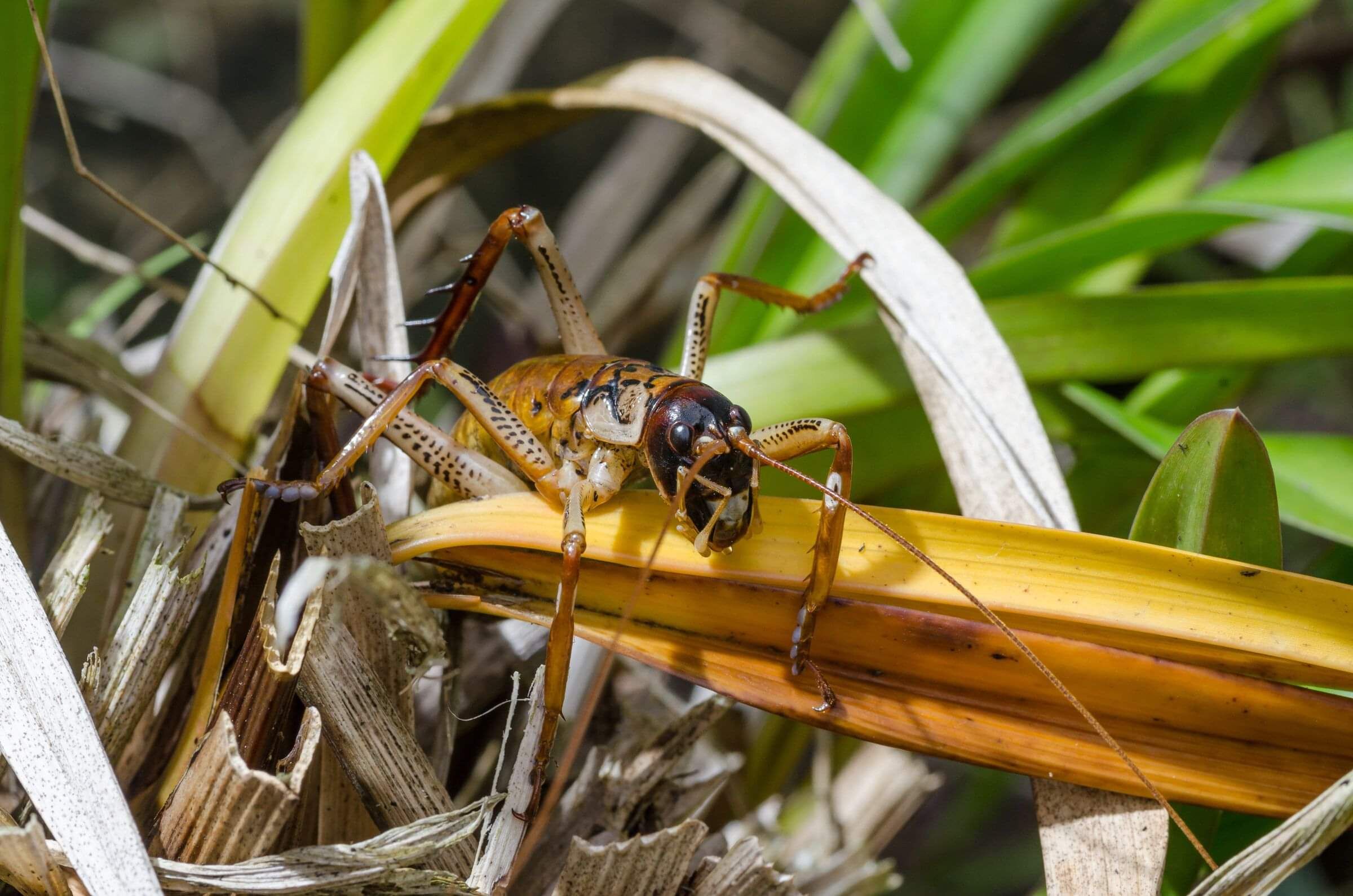
Nature’s nocturnal nurturers
Aotearoa New Zealand is a wētā wonderland with around 100 species hopping about - including the tree, ground, cave, giant and tusked wētā. In the Waitākere Ranges, you can spot the first three varieties.
Habitat: Grasslands, shrubland, forests and caves.
Egg-laying period: Autumn and winter; eggs hatch in spring.
Diet: Small invertebrates, leaves, flowers, fruit and seeds.
Size: Varies greatly by species.
What’s their superpower?
Since wētā are sensitive to environmental changes, they’re great indicators of our ecosystem’s health. Lots of healthy wētā equals a happy environment. If numbers drop, it’s a sign something isn’t right.
Why do we need them?
They provide nutrients to the soil by eating all sorts of native leaves, flowers and fruit, and dispersing it through their waste.
Native birds, reptiles and bats love to feast on wētā making them a vital link in the food chain.
Plus, ground wētā make the earth breathable by creating little holes like a sponge that let air and water flow which keeps soil healthy and plants happy.
Without these gentle giants of the insect world, we’d lose many important native plants and animals which would upset our ecosystem balance and cause big issues for our environment.
Did you know?
Frozen, not finished: mountain stone wētā can survive with about 82% of their body water turned to ice, then thaw out and carry on.
Fascinating facts
Leggy listeners: Some wētā have ears on their front legs, just below the knee joint, while others have no ears at all.
Silent singers: Some male wētā rub body parts together to make songs too low for us to hear.
Cultural icons: In Māori culture, wētā symbolise strength and resilience and are celebrated in traditional tales.
Prehistoric prowlers: These insects are so ancient, they date back to the era of dinosaurs.
Lofty leapers: Some cave wētā can leap distances of around 2 metres in a single bound.
Conservation corner
Many wētā are doing well, but 16 species are at risk. Habitat loss and predators remain major threats, while bright lights can make some tree and cave wētā avoid an area. Protect wild places, trap predators and keep outdoor lighting low.
How you can help
Set traps in your area to keep pesky predators in check.
Make a wētā hotel. Wētā live in holes - usually made by other insects - so creating a small dry hole away from predators gives them a safe space to hide.
Support conservation programmes that protect wētā and their natural habitats.
Keep your cat indoors at night as they love to catch wētā.
Spread the word about the importance of wētā and why we need to keep them safe.
Help us to help the wētā
NZ is a wētā wonderland and we'd like to keep it that way. Without these miniature monsters, we'd lose many important native plants and animals, which would upset our ecosystem balance.
With over 75% of our indigenous species at risk of extinction*, the Pest Free Waitākere Ranges Alliance is raising funds to help defend the many special species of the Waitākere Ranges.
Thank you for your support of this fascinating creepy-crawly!
Waiatarua / Wētā
Supporter Gear
Support the conservation efforts of Pest Free Waitākere Ranges Alliance!
By shopping with us, you're contributing to the protection and preservation of our ngahere, and supporting our vision of a restored and thriving Waitākere Ranges.
Choose from a range of clothing and accessories printed with our exclusive design by Kendra Stoner featuring Waiatarua's special species – the wētā.
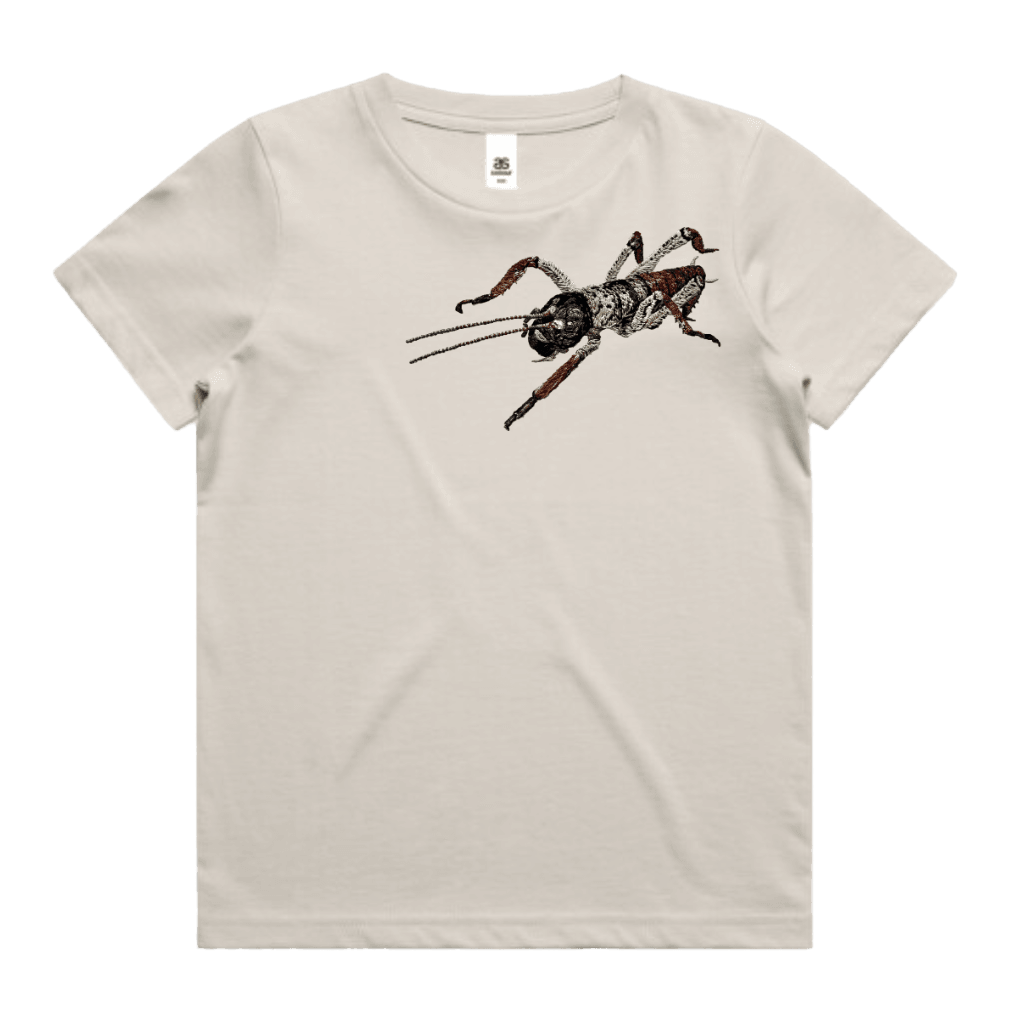
Image credits: Fern by Toby Hall on Unsplash. Wētā on log by Greg Holwell.
Get our newsletter
Receive monthly news and updates from Pest Free Waitākere Ranges Alliance.
